 Jyoti Sharma
August 13, 2026
Jyoti Sharma
August 13, 2026
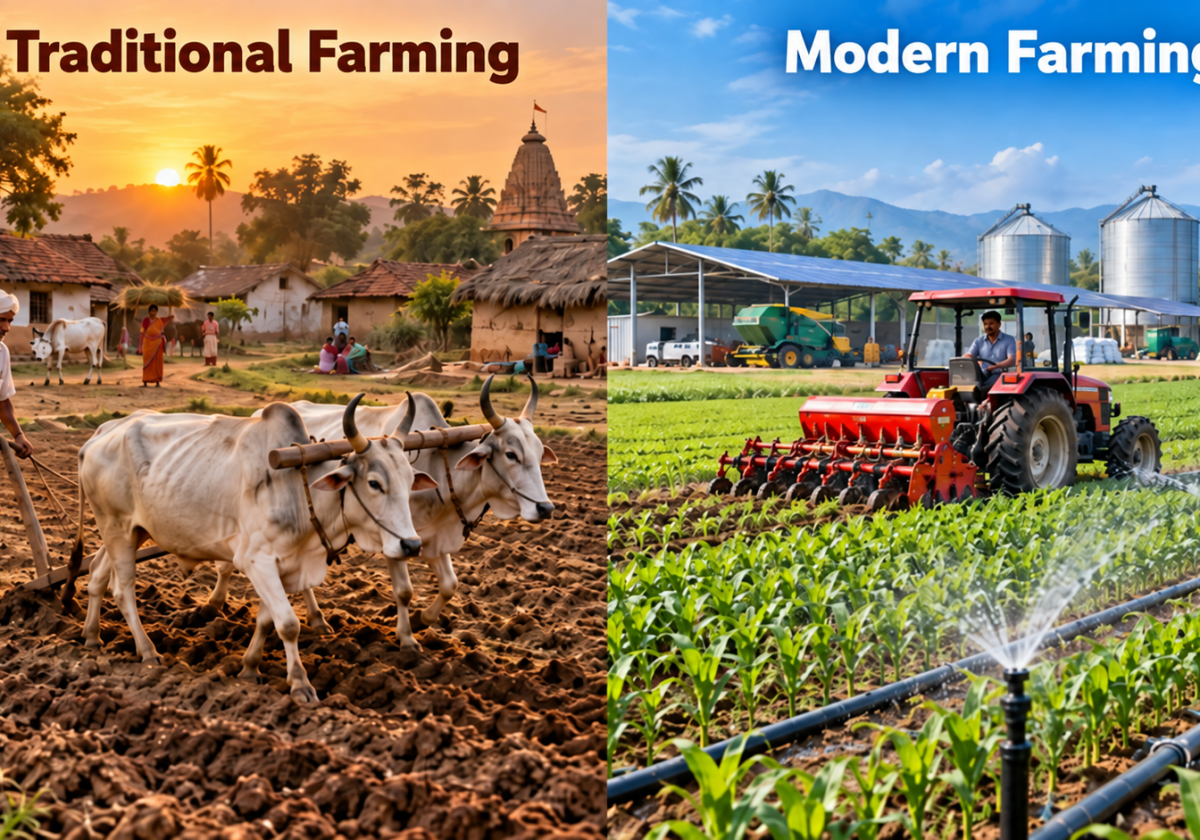
In the earlier days, knowing how your crop was doing meant walking the field yourself, row by row, hoping you’d catch a pest outbreak or a water-stressed patch before it spread. That’s changing fast! Today, a farmer can pull up a smartphone and see, in near real time, exactly which part of a 10-acre plot needs attention, without setting foot outside.
That change is being driven by satellite-based crop health monitoring, and it’s no longer a “someday” technology. It’s already reshaping how Indian farmers plan irrigation, spot disease early, and make the kind of timely decisions that separate a good harvest from a great one.
What satellite crop health monitoring actually does
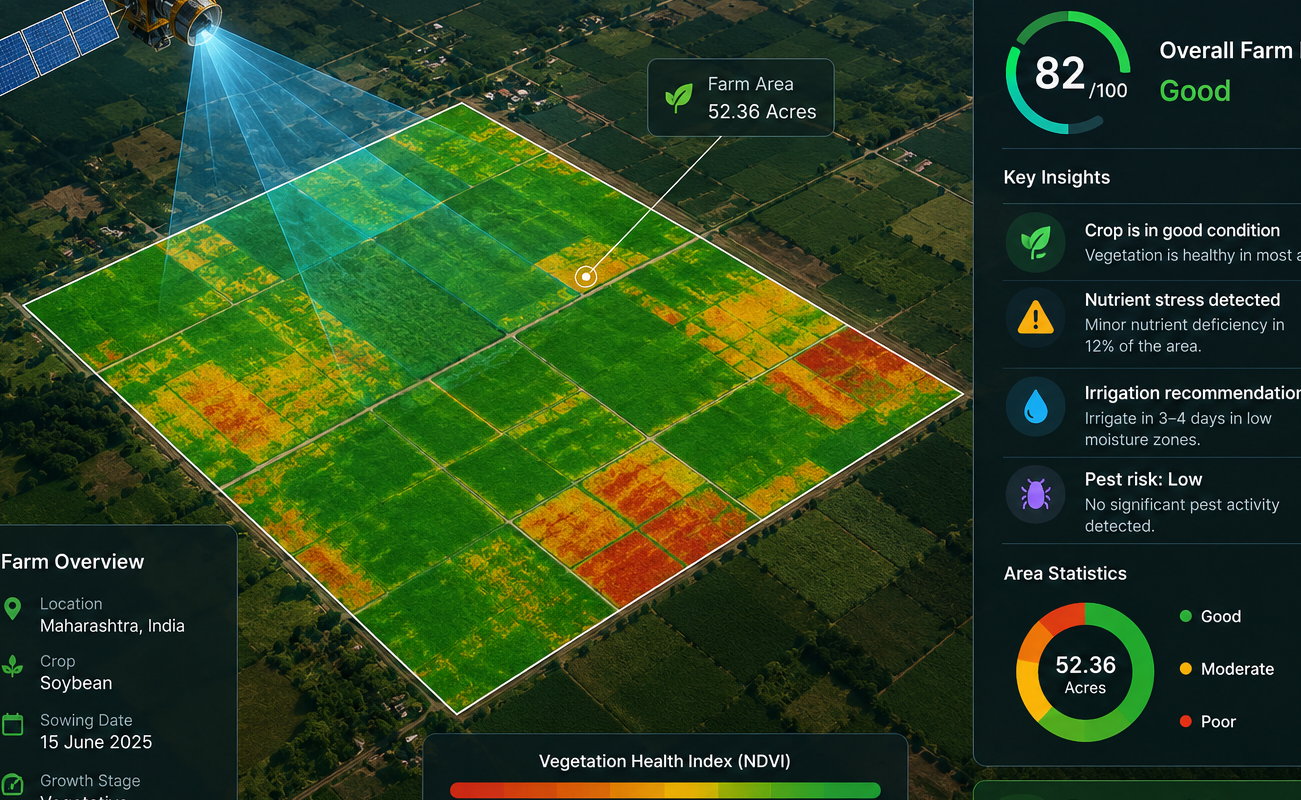
The technology uses satellites to capture multispectral images of farmland, which are then processed to reveal things the human eye can’t easily see: vegetation health, soil moisture levels, and early signs of stress from pests, disease, or water shortage. Combined with AI-driven analytics, these images turn into practical, field-level advisories like what to irrigate, when to spray, and where yield might be at risk.
Modern platforms now integrate this satellite data with weather feeds, soil sensors, and even drone imagery for a fuller picture. The output is more than just a pretty heatmap; it’s predictive. Systems can forecast yield potential and disease risk well ahead of time, letting farmers act instead of react.
Why this matters today
Indian agriculture is at an interesting inflection point. The country’s precision agriculture market, which includes satellite and remote-sensing-based farming tools, was valued at roughly USD 304 million in 2024 and is projected to grow at a compound annual rate of around 9% through the mid-2030s, according to industry estimates. Some estimates put the broader precision farming market in India on a similar trajectory, with double-digit CAGR forecasts through 2033.
That growth isn’t happening in a vacuum. Government-backed initiatives are actively pushing satellite and drone-based precision tools into the hands of smaller farmers, not just large commercial operations. As hardware costs fall and connectivity improves in rural India, this kind of monitoring, once the preserve of large agribusinesses, is becoming genuinely accessible to the average landholder.
Globally, the picture is similar. Analysts tracking the wider precision farming market expect it to roughly double in value between 2024 and 2035, with remote sensing and satellite-based technologies cited repeatedly as core growth drivers.
The productivity payoff
The value of satellite monitoring shows up in a few concrete ways:
- Early stress detection: Vegetation indices like NDVI can flag a struggling patch of crop days or weeks before it’s visible to the naked eye, giving farmers a real head start on intervention.
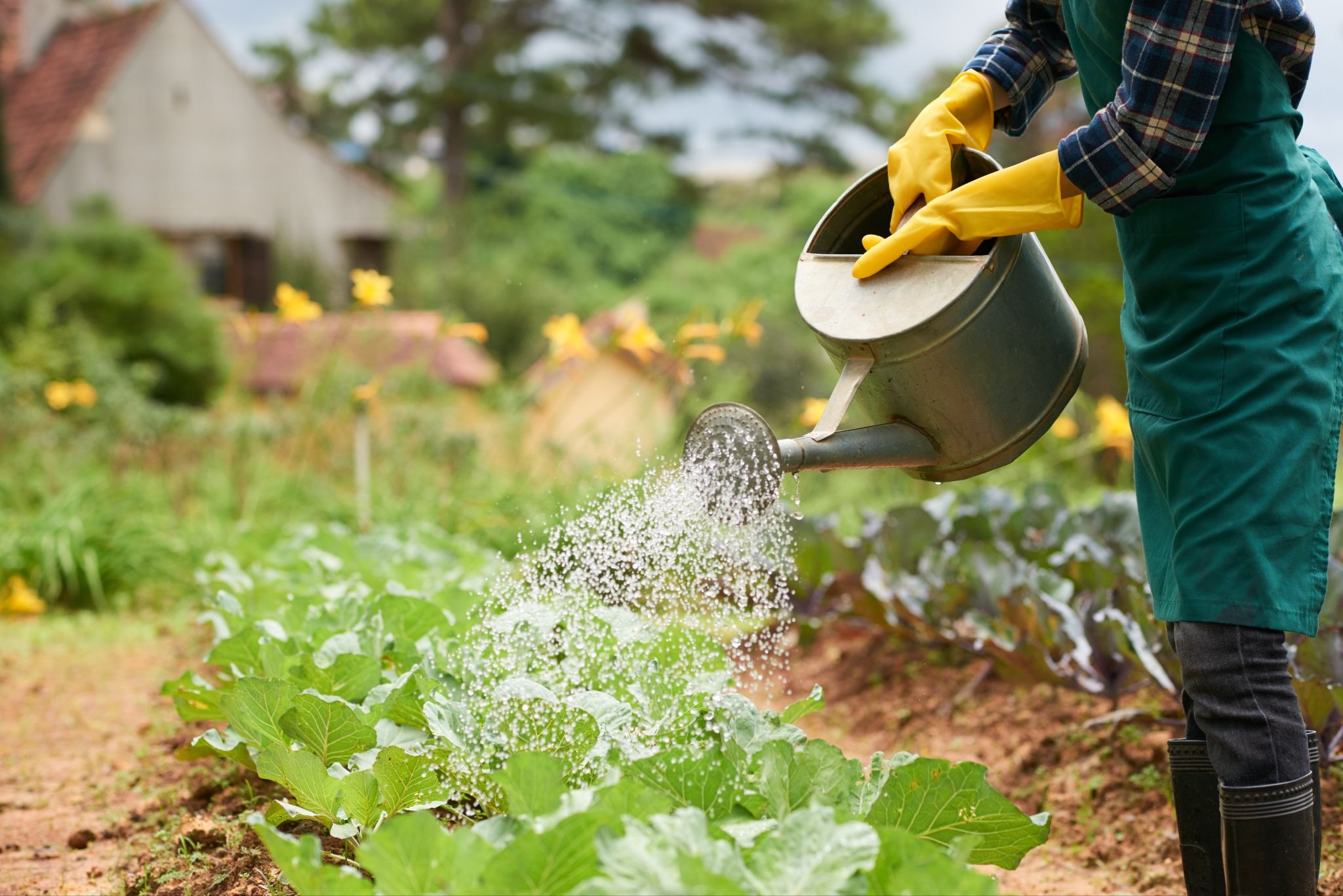
- Smarter irrigation: Instead of watering uniformly across a field, farmers can direct resources only where soil moisture data shows a genuine need, cutting waste and often improving yield in the same stroke.
- Reduced input costs: Because problems are caught early and located precisely, farmers spend less on blanket pesticide or fertiliser applications and more on targeted, effective ones.
- Better planning at scale: For agribusinesses and cooperatives managing produce across many smallholder plots, satellite data offers a bird’s-eye view that would be logistically impossible to gather through manual field visits alone.
agribazaar’s role in this
This is precisely the gap agribazaar’s AgriBhumi platform is built to close. By bringing satellite-based farm intelligence directly to Indian farmers across 13 states, AgriBhumi makes it possible to monitor crop health, track field conditions, and get actionable insights without needing specialised equipment or technical expertise. It’s part of a broader agribazaar effort to put the same data-driven advantages that large commercial farms have long enjoyed into the hands of every farmer on the platform, alongside tools for mandi price discovery, input planning, and online agri trading.
Conclusion
Satellite crop health monitoring isn’t going to replace the farmer’s judgment. Nothing built on data alone can account for the intuition that comes from generations of working the same land. But it does something valuable: it removes the guesswork from the parts of farming that don’t need to be guesswork anymore.
As adoption grows across India and the underlying technology gets cheaper and more precise, the farmers who lean into these tools early are likely to be the ones best positioned to weather bad seasons and make the most of good ones.
FAQs
- Is satellite crop health monitoring only useful for large farms?
No. While it was historically adopted by bigger commercial operations, platforms like AgriBhumi are specifically designed to bring this technology within reach of small and marginal farmers. - How often is satellite data updated?
This depends on the satellite and platform, but many modern systems offer near-daily imagery, allowing for continuous rather than periodic monitoring. - Does this replace the need for field visits?
Not entirely. It reduces how often and how urgently visits are needed by helping farmers prioritise where attention is actually required. - What kind of problems can satellite monitoring detect?
It’s most effective at picking up vegetation stress linked to water shortage, nutrient deficiency, and early-stage pest or disease pressure, issues that show up in plant health before they’re visible to the eye. - Do farmers need special equipment or a big investment to use this technology?
No. Platforms like AgriBhumi are built to work through a smartphone, so farmers don’t need to buy sensors, drones, or specialised hardware to access satellite-based insights.