
 Jyoti Sharma
March 26, 2026
Jyoti Sharma
March 26, 2026
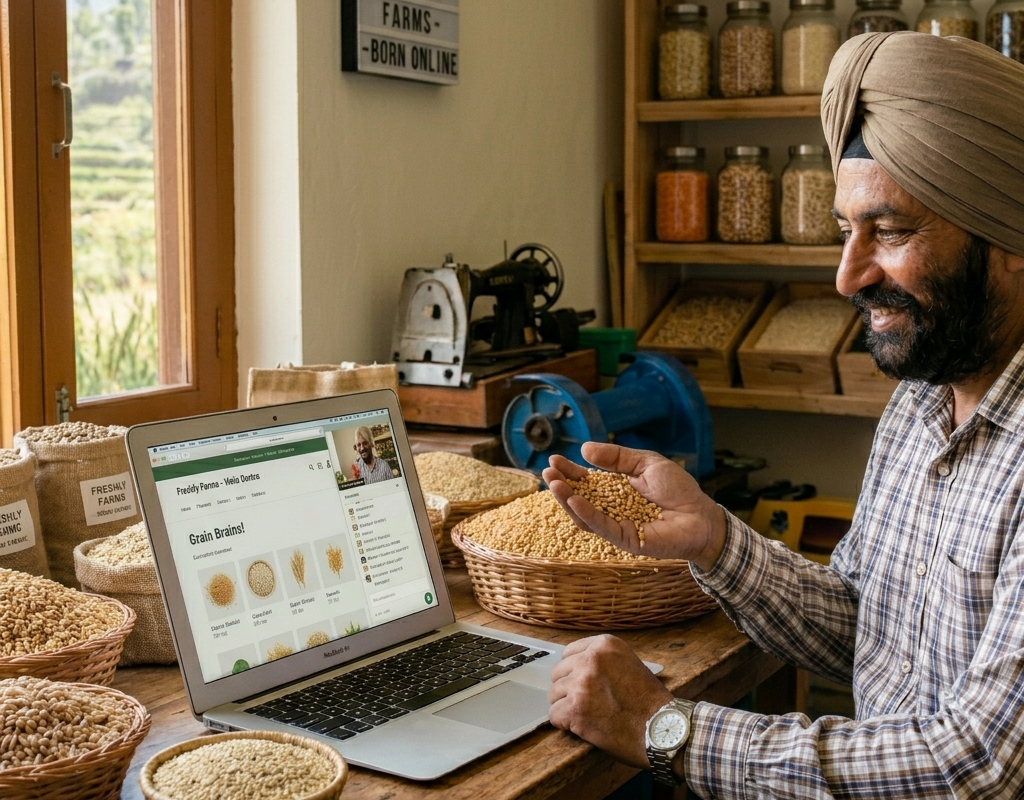
For decades, agricultural trade in India has followed a familiar path. Farmers harvest their crops, transport them to nearby mandis, and rely on traders or intermediaries to determine prices. While this system has supported the agricultural economy for years, it has also come with limitations, restricted market access, limited price visibility, and dependence on local buyers.
But agriculture in India is changing rapidly. As digital connectivity improves and smartphones reach even remote rural areas, farmers are increasingly gaining access to tools that help them make better decisions. Among the most impactful innovations in this transformation are digital agricultural marketplaces.
These platforms are gradually reshaping how agricultural commodities are bought and sold by connecting farmers, traders, processors, and buyers through technology. The result? Greater transparency, faster transactions, and a wider market reach for agricultural produce.
India’s Digital Agriculture Momentum
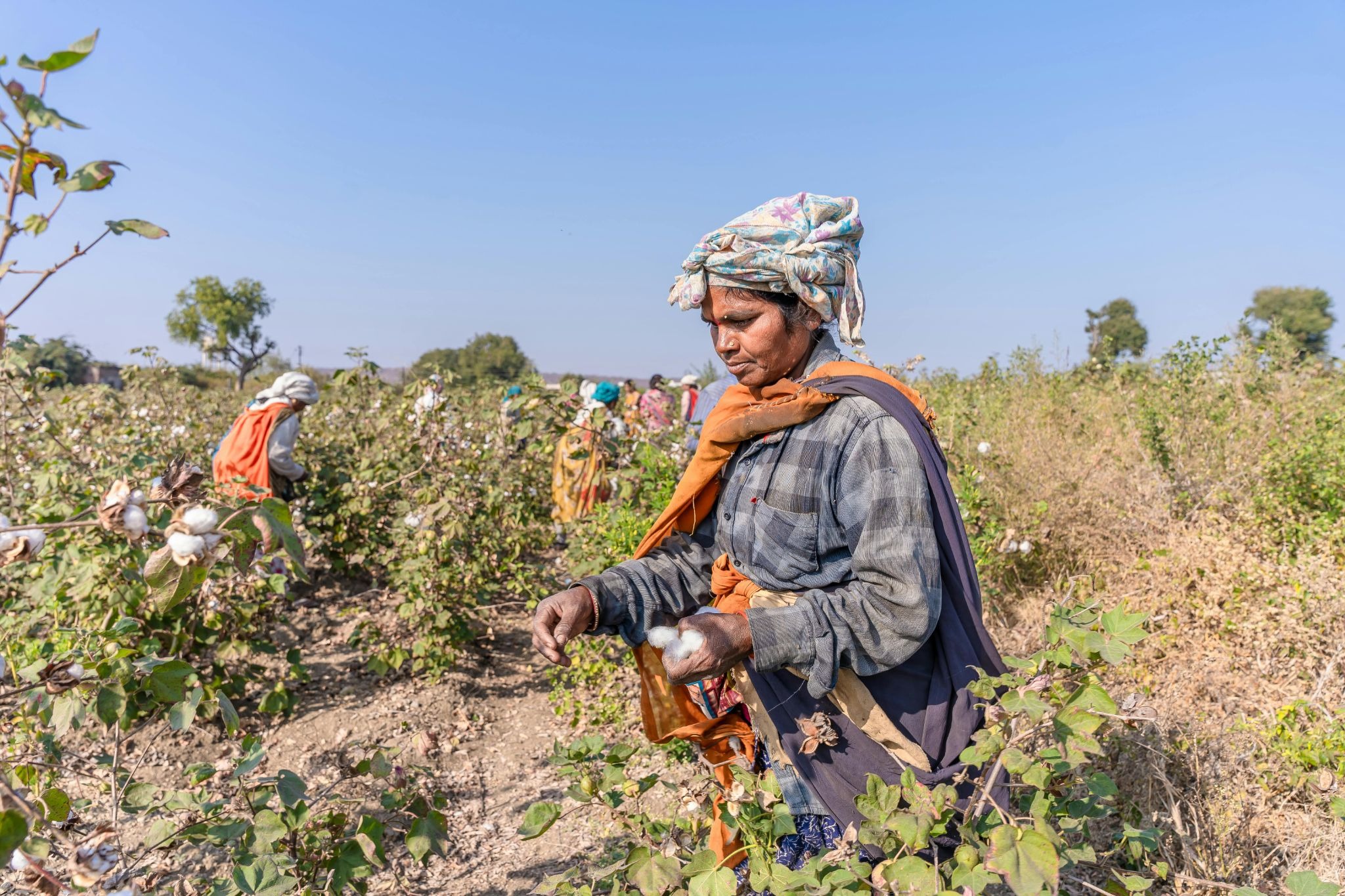
The shift toward digital agriculture is not happening in isolation. It is part of a broader transformation across the farming ecosystem. Today, India has over 146 million farmers, and nearly 50% of the country’s workforce depends on agriculture. Improving productivity and market access for such a large sector requires technology-driven solutions.
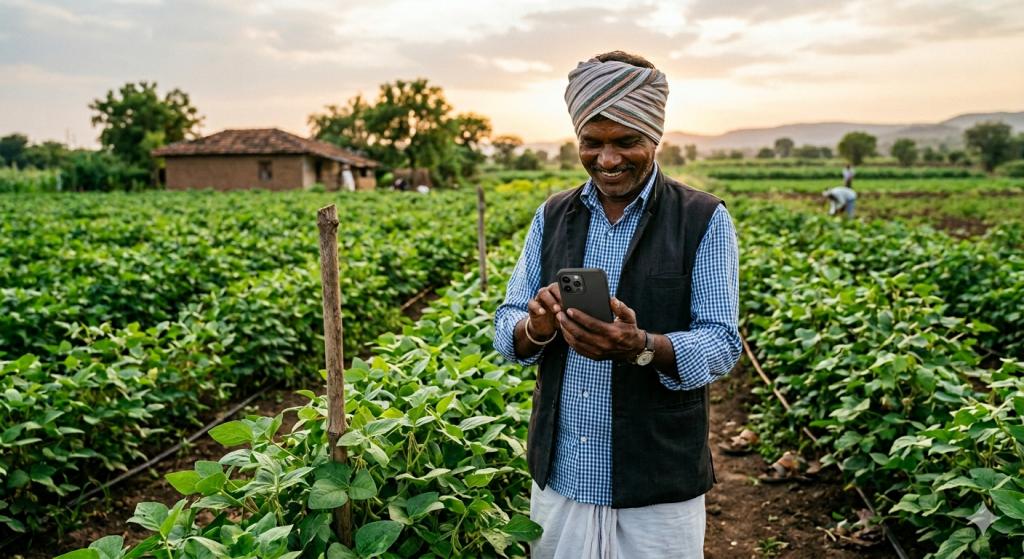
Several trends show how quickly digital agriculture is evolving:
- By 2026, India is projected to have 1 billion smartphone users, driven by rural demand and 5G adoption.
- Nearly 60% of Indian farmers are expected to adopt digital tools for weather forecasts, crop advisory, and market information by 2025.
- The Indian agritech market was valued at around USD 974 million in 2025 and is projected to exceed USD 2.5 billion by 2034, reflecting strong adoption of technology across the sector.
As farmers become more comfortable with digital tools, marketplaces that connect production with buyers are gaining significant traction.
Why Traditional Agricultural Marketing Needs Change
India’s traditional mandi system has played a crucial role in agricultural trade. However, it has also presented challenges that limit farmers’ ability to maximise the value of their produce. Some of the most common issues include:
- Limited buyer networks: farmers often sell only within their local mandi.
- Price information gaps: farmers may not know how prices differ across regions.
- Multiple intermediaries: several layers of traders can reduce farmer margins.
- Delayed payments: settlements may take time, which can affect cash flow.
These challenges have made it difficult for farmers to fully benefit from demand in other markets or regions. Digital marketplaces are now helping bridge this gap.
How Digital Marketplaces Are Improving Price Discovery
One of the most powerful advantages of digital agricultural marketplaces is real-time price discovery.
Instead of relying solely on local traders for price information, farmers can now view market prices across different locations and commodities. This visibility allows them to better understand demand trends and make more informed selling decisions.
Digital platforms typically enable:
- Real-time price visibility across multiple agricultural markets
- Direct interaction with buyers and traders beyond local mandis
- Transparent bidding mechanisms that encourage competitive pricing
- Secure digital payment systems for faster transaction settlements
Research suggests that data-driven agritech platforms could generate USD 50–70 billion in additional value for Indian agriculture by 2025, improving efficiency, transparency, and supply chain coordination. For farmers and traders alike, this level of transparency can make a meaningful difference in how commodities are traded.
Opening the Door to Larger Markets
Perhaps the biggest shift digital marketplaces bring is the ability to connect agricultural producers with a much larger pool of buyers.
Earlier, farmers often sold their produce to whoever was available at the nearest mandi. Today, digital platforms allow them to connect with buyers across states and regions, significantly expanding their market opportunities.
This broader connectivity benefits every stakeholder in the supply chain:
- Farmers can access more buyers and potentially achieve better price realisation.
- Commodity traders and processors can source produce directly from producing regions.
- Bulk buyers and exporters can procure commodities more efficiently and consistently.
At the same time, technologies such as satellite monitoring and precision agriculture are making farming itself more data-driven. Today, over 30% of farms in India are adopting precision agriculture technologies, helping farmers optimise resources and improve crop yields.
When these production insights combine with digital trading platforms, the agricultural value chain becomes significantly more efficient.
agribazaar’s Role in Building a Digital Agricultural Marketplace
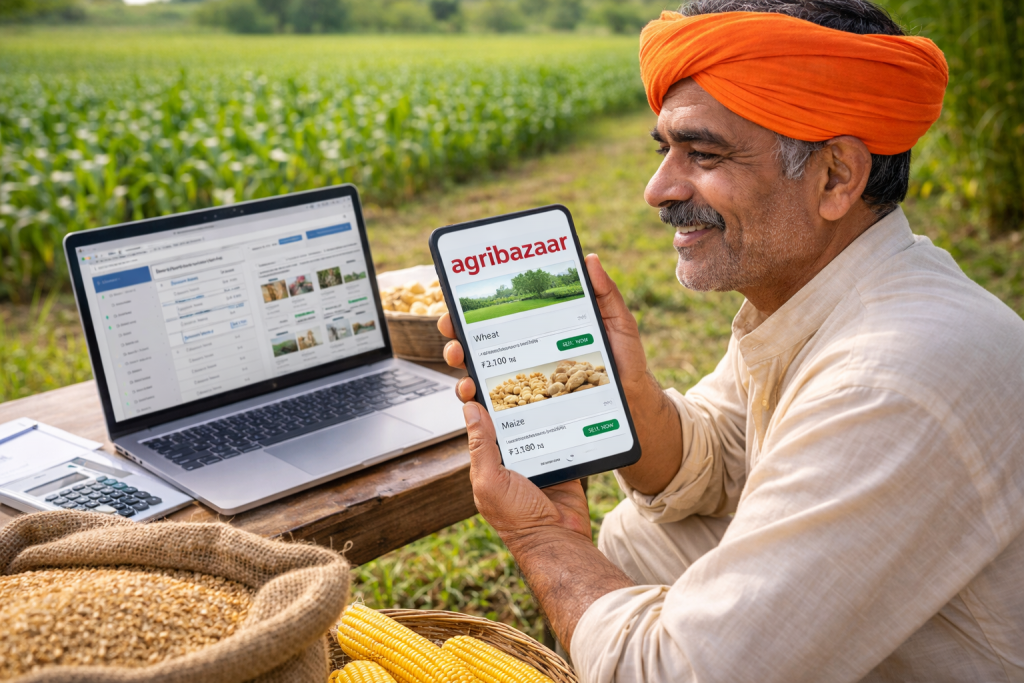
As digital agriculture grows, platforms that integrate market access with data insights are becoming increasingly important. agribazaar is one such platform contributing to the modernisation of agricultural trade in India. agribazaar’s technology-enabled ecosystem supports agricultural stakeholders through multiple services, including:
- A digital commodity trading platform that provides real-time prices for over 70 agricultural commodities
- A nationwide network connecting over 3.5 lakh farmers and traders
- AgriPay is a secure payment mechanism designed to facilitate smooth and reliable trades, and has done transactions over ₹100 crore
- Nationwide trading connectivity that enables buyers and sellers to transact across different markets in India
Beyond trading, agribazaar also offers pre-harvest intelligence through its AgriBhumi platform. AgriBhumi uses geospatial technology and satellite imagery to generate valuable farm-level insights such as:
- Geo-tagging of farms and land mapping
- Crop pattern and crop history analysis
- Satellite-verified agricultural data
- Insights that support credit assessment and supply planning
By combining farm-level intelligence with digital trading capabilities, agribazaar helps create a more informed and efficient agricultural marketplace.
What Lies Ahead for Digital Agricultural Marketplaces
The future of agricultural trade in India is likely to be increasingly digital and data-driven. As connectivity improves and technology adoption accelerates, digital marketplaces will continue to evolve beyond simple trading platforms.
In the coming years, we may see greater integration of:
- AI-powered price forecasting tools
- Satellite-based crop monitoring systems
- Blockchain-enabled traceability solutions
- Integrated financing and risk management services
These innovations will not only strengthen agricultural markets but also empower farmers, traders, and agribusinesses with better information and more efficient trading systems.
In many ways, digital marketplaces are becoming the backbone of a more connected and transparent agricultural economy: one where farmers can access markets beyond geography and where agricultural trade becomes faster and more inclusive.
 Connect With Us