
 Jyoti Sharma
March 12, 2026
Jyoti Sharma
March 12, 2026
Agriculture is becoming increasingly data-driven. As climate variability, fragmented landholdings, and rising input costs challenge farmers across India, technology is stepping in to improve how farms are monitored, managed, and financed. From satellite data/imagery to artificial intelligence, digital tools are helping transform traditional agriculture into a more transparent, data-driven ecosystem.
India’s agricultural sector remains one of the largest in the world and continues to play a crucial role in the economy. Agricultural exports are projected to reach around $55 billion in 2025, reflecting growing global demand for Indian farm produce and the sector’s increasing modernisation.
At the same time, access to finance continues to expand. Agricultural credit is expected to exceed ₹32.5 lakh crore in FY26, underscoring the scale of lending to rural and farm-based activities.
Despite these developments, one major challenge persists: obtaining accurate, verified farm-level data.
The data gap in agriculture
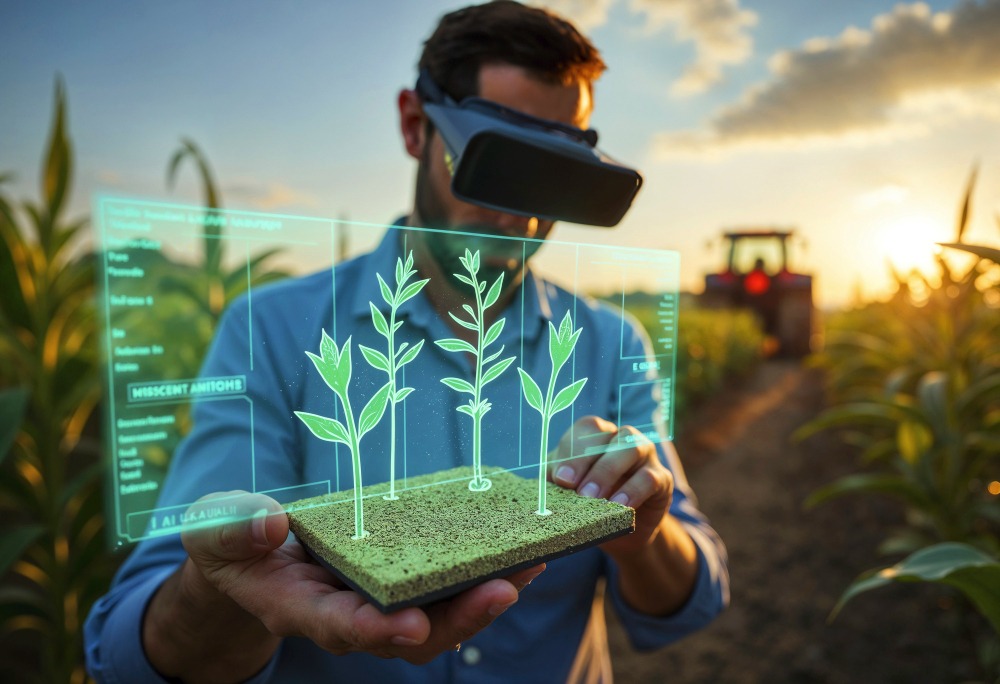
Traditional agricultural systems often rely on manual surveys, fragmented land records, and self-reported crop information. This makes it difficult for stakeholders such as banks, agribusinesses, and insurers to verify farm-level details.
Some of the common challenges include:
- Unclear or outdated farm boundaries
- Limited visibility of crop type and acreage
- Lack of reliable crop health monitoring
- Difficulty in estimating expected yields
For financial institutions, the absence of reliable data increases credit risk and verification costs. Farmers, on the other hand, may face delays in loan approvals or limited access to institutional credit.
This is where digital farm intelligence platforms are beginning to play a transformative role.
How satellite monitoring is transforming agriculture
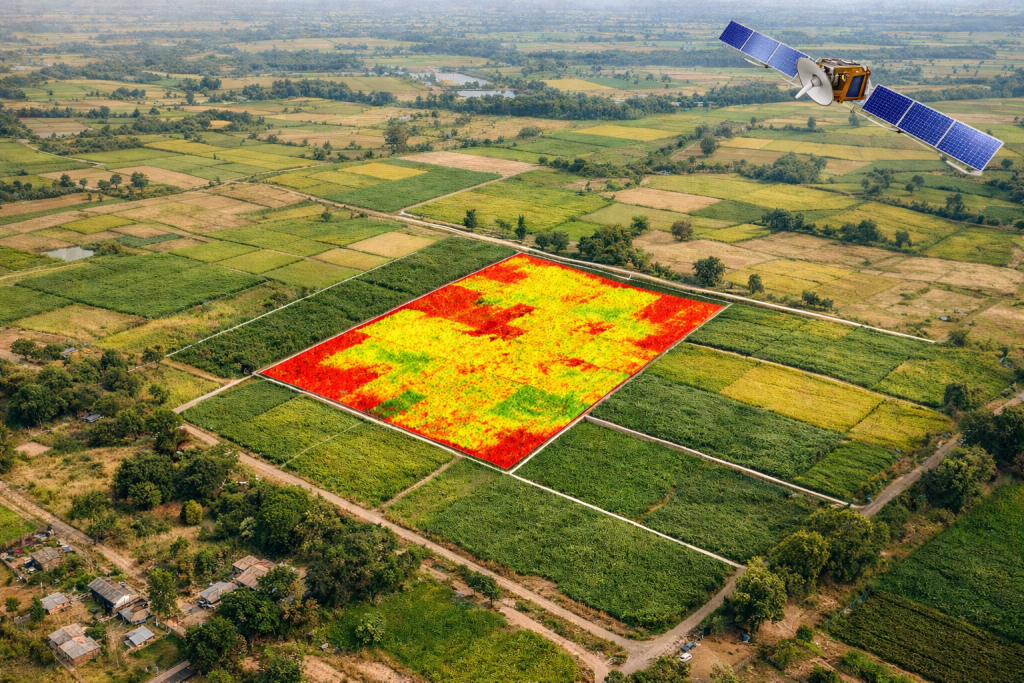
Satellite-based technologies now allow agricultural land to be mapped and monitored at scale. By using remote sensing techniques, vegetation indices, and multi-spectral imaging, satellite data can track crop growth, detect stress, and estimate yields across large regions. These technologies enable continuous monitoring throughout the crop cycle and help identify potential risks much earlier than traditional field inspections.
Satellite monitoring can help detect:
- Water stress in crops
- Early signs of pest infestations
- Crop disease patterns
- Abnormal growth or vegetation decline
Modern models combining satellite imagery with machine learning have demonstrated the ability to classify crop health with over 97% accuracy, making farm monitoring significantly more precise and scalable. For farmers, this means better insights into crop conditions, while for institutions, it provides verified agricultural intelligence.
Improving credit access through data
One of the most significant advantages of digital farm intelligence platforms is their ability to support credit assessment and lending decisions.
Agricultural lending has grown steadily in India over the past decade. Agricultural credit disbursement has been expanding at over 13% annually, reflecting increasing formalisation of rural finance and a gradual shift away from informal lending sources.
However, banks and financial institutions still face challenges when evaluating farm loans because field verification can be:
- time-consuming
- expensive
- inconsistent across regions
With satellite-driven farm intelligence, lenders can access reliable farm-level data such as:
- Geo-tagged farm boundaries
- Crop type and cropping history
- Vegetation health indicators
- Estimated yield potential
This allows financial institutions to make more informed lending decisions, assess risk more accurately, and monitor crops during the growing season.
For farmers, this translates into:
- Faster loan approvals
- Improved credit eligibility
- Greater access to institutional finance
Pre-harvest intelligence for smarter decisions
Digital agriculture platforms are also bringing new capabilities in pre-harvest intelligence, enabling stakeholders to analyse crop conditions before harvest. Satellite monitoring with advanced analytics can estimate crop production levels weeks or even months in advance.
This insight helps multiple stakeholders across the agricultural ecosystem:
Farmers
- Plan harvest and marketing strategies
- Monitor crop performance throughout the season
Traders and agribusinesses
- Anticipate supply trends
- Plan procurement and logistics
Financial institutions
- Evaluate repayment capacity
- Monitor crop health during the loan cycle

agribazaar’s role in digital farm intelligence
As part of its broader agritech ecosystem, AgriBhumi focuses on building verified farm intelligence through satellite monitoring, remote sensing, and GIS-based mapping. Agribhumi has established its footprint across over 15 Indian states, with more than 3 Crore hectares of farmland mapped.
The platform geo-tags farms and creates a digital layer of verified agricultural data, including:
- Farm boundaries
- Crop history
- Crop health indicators
- Satellite-based land verification
This enables farmers, agribusinesses, and financial institutions to access reliable farm-level insights that support decision-making across the agricultural value chain.
By integrating farm intelligence with Agribazaar’s broader ecosystem of digital trading platforms, market insights, and financial linkages through Agriwise Finserv, the platform helps bridge the gap between farm-level data and institutional services.
The future of data-driven agriculture
Agriculture is entering a new era where data, technology, and finance are becoming deeply interconnected. Satellite imagery, AI-driven analytics, and digital farm mapping are no longer experimental technologies. Instead, they are rapidly becoming essential tools for modern agricultural systems.
In the coming years, platforms that integrate:
- satellite intelligence
- digital marketplaces
- financial services
will play a crucial role in building a more transparent, efficient, and resilient agricultural ecosystem.
As digital farm intelligence continues to evolve, it has the potential to transform not only how crops are grown, but also how agricultural markets function and how credit flows to rural communities.
Disclaimer
The content published on this blog is provided solely for informational and educational purposes and is not intended as professional or legal advice. While we strive to ensure the accuracy and reliability of the information presented, agribazaar make no representations or warranties of any kind, express or implied, about the completeness, accuracy, suitability, or availability with respect to the blog content or the information, products, services, or related graphics contained in the blog for any purpose. Any reliance you place on such information is therefore strictly at your own risk. Readers are encouraged to consult qualified agricultural experts, agronomists, or relevant professionals before making any decisions based on the information provided herein. agribazaar, its authors, contributors, and affiliates shall not be held liable for any loss or damage, including without limitation, indirect or consequential loss or damage, or any loss or damage whatsoever arising from reliance on information contained in this blog. Through this blog, you may be able to link to other websites that are not under the control of agribazaar. We have no control over the nature, content, and availability of those sites and inclusion of any links does not necessarily imply a recommendation or endorsement of the views expressed within them. We reserve the right to modify, update, or remove blog content at any time without prior notice.

 Connect With Us