
 Jyoti Sharma
February 26, 2026
Jyoti Sharma
February 26, 2026
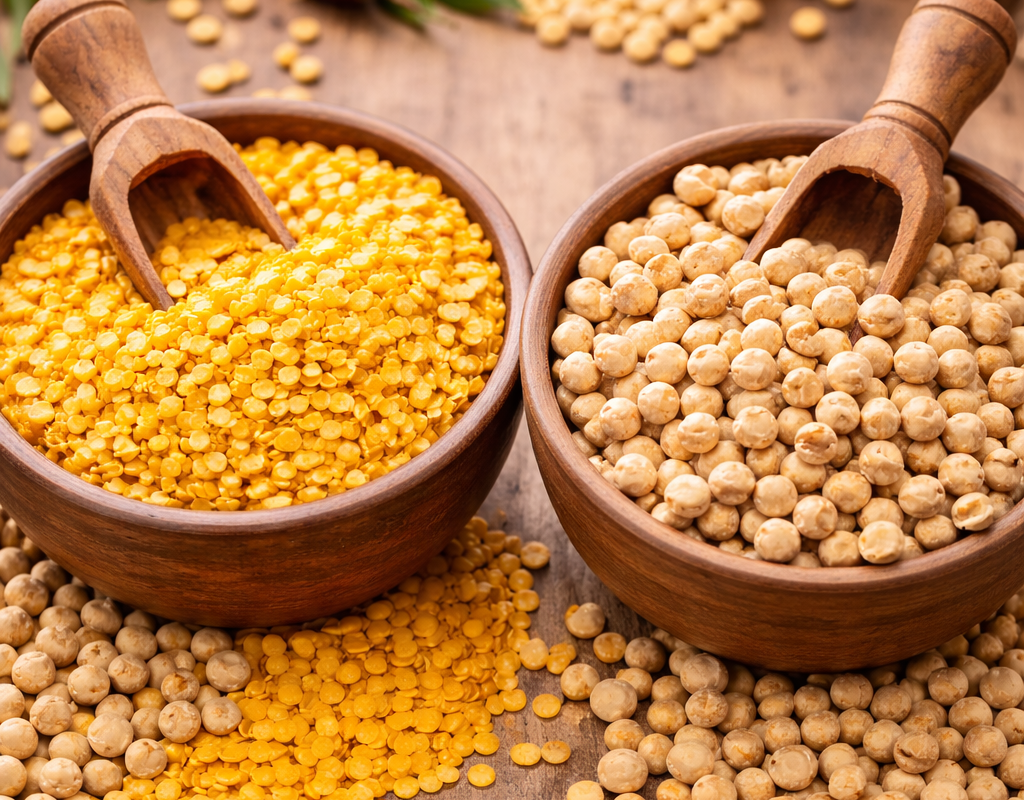
India’s pulses market is set to continue evolving through 2026, with significant implications for stakeholders in the tur (pigeon pea) and chana (gram) dal segments. These two dal varieties not only dominate Indian households as everyday protein sources but also feature prominently in discussions of agricultural cultivation and trade. As production estimates, import trends, government MSP policies, and domestic demand shift, stakeholders are closely watching how 2026 might unfold for tur and chana.
Current production trends and estimates
India’s total pulse production has been rising steadily, with an estimated 25.23 MMT in the 2024–25 crop year, about 4% higher than the prior year, owing to favourable seasonal conditions and expanded acreage. (The Financial Express)
For the subsequent 2025–26 crop year, industry projections suggest that Indian pulses production could reach around 27 MMT, driven mainly by stronger rabi (winter) and kharif (monsoon) plantings. A significant portion of this production growth comes from chana, benefiting from increased soil moisture and better weather prospects, and tur, where planting intentions are also up.
In a structural shift, government targets under the Mission for Aatmanirbharta in Pulses aim to increase overall pulses output to 35 MMT by 2030–31, a strategic direction that will impact tur and chana supply in the longer term. (The Economic Times)

Tur: Volatility amid supply and weather risks
Tur remains one of the most strategically important and yet volatile pulse crops in India. Tur’s sensitivity to climate variations, particularly cold spells during the flowering stage, has recently significantly impacted yields, with reports of up to 30% crop loss in key regions such as Vidarbha in Maharashtra due to low winter temperatures.
This kind of weather shock directly affects the supply and prices. In early 2026, wholesale tur prices shot up from roughly ₹6,000 to around ₹8,000 per quintal in some major markets. (The Times of India) To manage such cyclical volatility, the government had strategised a buffer stock of 1 MMT of tur to stabilise supply and reduce sharp price movements. (mint)
The MSP for tur for the year 2025-26 was fixed at Rs 8,000 per quintal ahead of the sowing season, which is encouraging extensive cultivation. MSPs can provide a minimum assured return on tur production, particularly if mandi prices trend below support levels. This becomes essential when cheap imports push down domestic mandi prices.
Chana dal: Growing output and rising policy focus
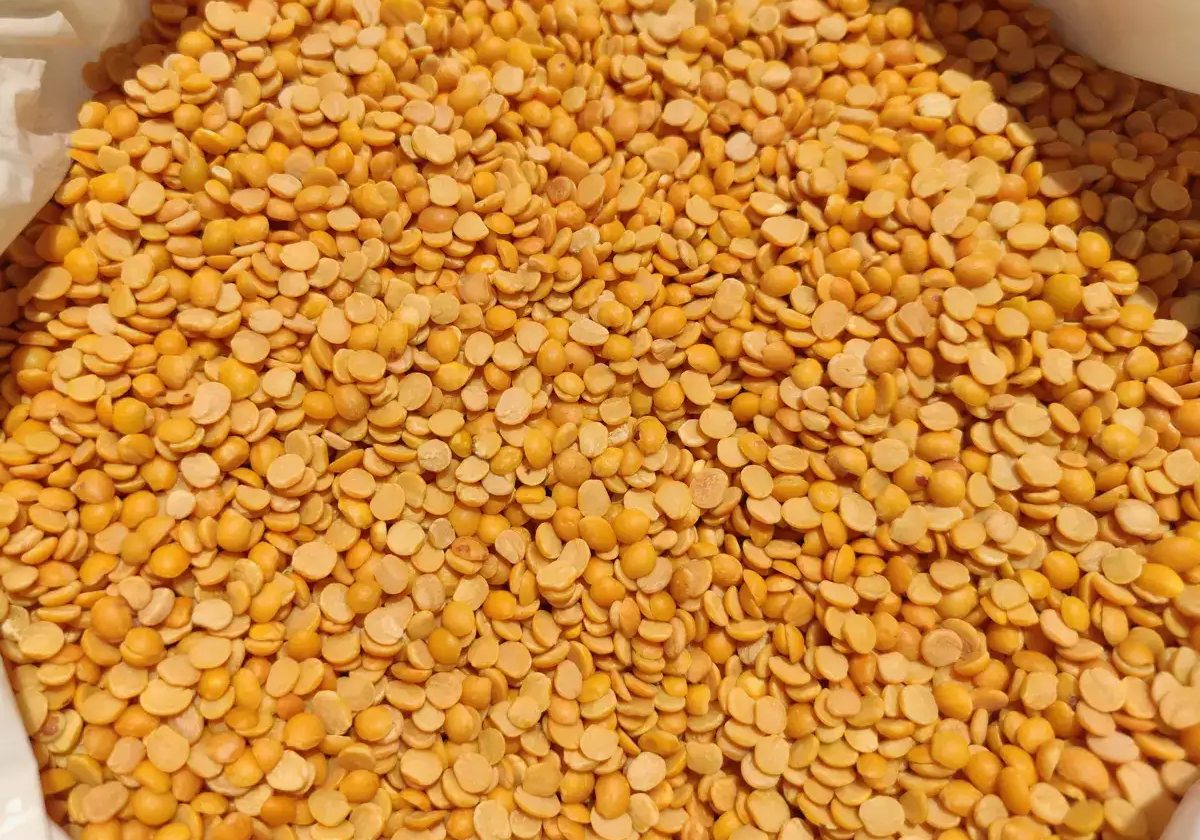
Chana dal, cultivated largely as a rabi crop in states like Madhya Pradesh, Rajasthan and Uttar Pradesh, has seen robust planting and production prospects thanks to good soil moisture due to above normal monsoon. The traditional reliance on imports was highlighted when the import duty on chana was relaxed in 2024, leading to a more than fourfold increase in imports as buyers capitalised on the tariff advantage.
However, rising domestic production and improved market prices have begun to narrow this reliance, especially as imports are expected to fall significantly, projected at around 0.5 MMT in FY26, down from 1.6 MMT in FY25, benefiting chana’s local pricing structure. The MSP of chana (gram) for the 2026-27 Rabi marketing season is Rs 5,875 per quintal. MSP increases help keep chana cultivation profitable, particularly when cheap imports and global price competition exert downward pressure on mandi prices.
Import and export dynamics: Tur and Chana in focus
Historically, India has been both the largest producer and the largest consumer of pulses globally, yet imports have been necessary to fill production gaps, especially for tur and chana. In 2024–25, pulse imports soared, with tur imports rising over 58% year-on-year, reinforcing the impact of foreign supply on domestic pricing.
However, policy changes allowing duty-free imports of pulses such as tur, urad and masoor up to March 2026 are aimed at easing supply and controlling prices. At the same time, import duties on chana and certain lentils remain in place to balance domestic production against foreign supply. Exports, while not as large as imports in volume, are shaping India’s pulse trade profile, offering opportunities in neighbouring and global markets, especially for premium chana processors and dal exporters.
agribazaar’s role in 2026 pulse markets
Amid evolving market dynamics for tur and chana dal in 2026, agribazaar continues to support farmers and buyers with dynamic price insights, transparent mandi rates, and market intelligence. Whether it’s analysing price trends in key market hubs or accessing real-time demand data, agribazaar provides stakeholders with actionable information to plan sowing and selling crops.
Beyond price data, agribazaar’s trading platform enables market participants to secure better value and mitigate risks associated with volatile supply conditions seen in the pulses sector.
Conclusion: What Lies Ahead for Tur and Chana Dal in 2026
Overall, 2026 looks poised to bring greater resilience into the Indian pulses market, particularly for tur and chana dal, thanks to higher production forecasts, targeted MSP and procurement policies, controlled import strategies, and stronger mandi operations. While short-term weather risks and international price swings remain variables, the structural path suggests a more balanced supply–demand situation compared with earlier years.
For farmers and traders alike, sharp attention to policy changes, procurement windows, and mandi analytics, supported by platforms like agribazaar, will be key to navigating the evolving pulses landscape in 2026.
Disclaimer
The content published on this blog is provided solely for informational and educational purposes and is not intended as professional or legal advice. While we strive to ensure the accuracy and reliability of the information presented, agribazaar make no representations or warranties of any kind, express or implied, about the completeness, accuracy, suitability, or availability with respect to the blog content or the information, products, services, or related graphics contained in the blog for any purpose. Any reliance you place on such information is therefore strictly at your own risk. Readers are encouraged to consult qualified agricultural experts, agronomists, or relevant professionals before making any decisions based on the information provided herein. agribazaar, its authors, contributors, and affiliates shall not be held liable for any loss or damage, including without limitation, indirect or consequential loss or damage, or any loss or damage whatsoever arising from reliance on information contained in this blog. Through this blog, you may be able to link to other websites that are not under the control of agribazaar. We have no control over the nature, content, and availability of those sites and inclusion of any links does not necessarily imply a recommendation or endorsement of the views expressed within them. We reserve the right to modify, update, or remove blog content at any time without prior notice.
 Connect With Us