 Jyoti Sharma
June 19, 2026
Jyoti Sharma
June 19, 2026
For years, agricultural lending in India has depended on a familiar set of questions.
Does the farmer own land?
What was the previous repayment history?
Is collateral available?
What does the local assessment say?
But agriculture is changing rapidly. And so is the kind of data being generated around farms.
Today, satellites can monitor crop health from space. Weather systems can track rainfall variability almost in real time. Farm boundaries can be geo-tagged digitally. Historical crop patterns can be analysed across seasons. Even vegetation stress can now be detected before it becomes visible on the ground.
Which raises an interesting possibility:
What if farms could eventually build a digital credibility profile based on verified agricultural intelligence?
In many ways, agriculture may already be moving in that direction.
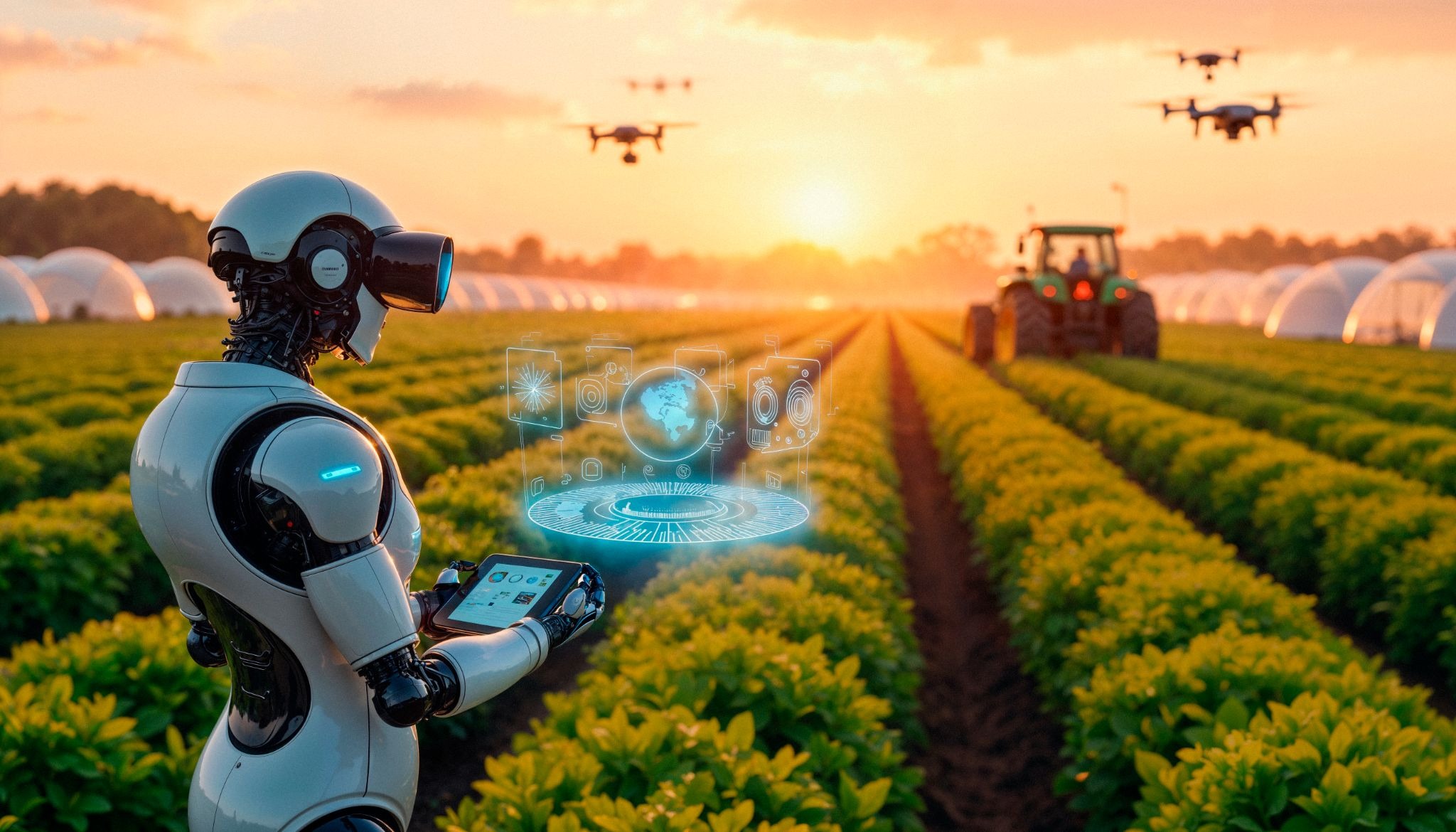
Agriculture is becoming increasingly measurable
For decades, farming remained one of the least digitised sectors when it came to structured data.
A large part of agricultural decision-making still depended on physical verification, fragmented records, and local intelligence. That created challenges not just for farmers, but also for banks, insurers, traders, and agri businesses trying to assess risk accurately.
But satellite technology and AI are beginning to change that.
Today, remote sensing tools can help monitor:
- crop acreage,
- sowing activity,
- vegetation health,
- water stress,
- yield trends,
- and even climate-related disruptions.
India is also rapidly expanding its digital agriculture infrastructure through initiatives around AgriStack, geospatial mapping, and digital farm records. At the same time, AI adoption across agriculture is accelerating, especially in areas like precision farming, crop intelligence, and risk assessment.
This is making agriculture far more measurable than it was a decade ago. And once sectors become measurable, they also become more financeable.
Why agricultural credit still faces a trust gap
Agriculture remains one of the most difficult sectors to assess from a credit perspective.
Unlike salaried income, farming outcomes depend on multiple unpredictable factors:
- weather,
- crop cycles,
- pest attacks,
- price volatility,
- and regional disruptions.
For lenders, this creates a visibility problem.
In many cases, financial institutions still struggle to assess real farm-level risks quickly and accurately, especially across fragmented rural landscapes.
This is where satellite-backed intelligence is becoming increasingly valuable.
Imagine being able to verify:
- whether cultivation actually happened,
- what crop was grown,
- how the crop progressed during the season,
- whether weather stress impacted production,
- or how land has performed historically.
That changes the nature of agricultural risk assessment completely.
Instead of depending only on static paperwork, lenders can potentially use dynamic farm intelligence.
And that could become one of the biggest shifts in agricultural finance over the next few years.
From land records to living farm intelligence
Traditional agricultural records are often static.
But farming itself is dynamic.
Satellite data intelligence changes that by creating continuously updated visibility around agricultural activity.
For example:
- Crop health changes can be monitored through vegetation indices.
- Weather-linked stress can be tracked regionally.
- Seasonal cropping patterns can be analysed historically.
- Geo-tagged farms can help improve verification accuracy.
- Yield trends can potentially support smarter financing decisions.
This is why satellite intelligence is increasingly becoming important not just for farming operations, but also for insurance, procurement, financing, and supply-chain planning.
Globally, AI and satellite-powered agriculture platforms are now being explored for credit scoring, climate-risk assessment, and predictive farm analytics.
In many ways, farms are beginning to create digital behavioural footprints, similar to how transaction histories transformed urban lending ecosystems.
How Agribhumi is contributing to this shift
As agriculture becomes more data-driven, platforms like agribazaar are helping build digital intelligence layers around farming ecosystems.
One of the most significant examples is Agribhumi, agribazaar’s land intelligence platform.
Agribhumi combines geo-tagged farm data, satellite-backed monitoring, crop history, and land intelligence to create stronger visibility across agricultural operations. Today, the platform has geo-tagged more than 4 lakh farms across multiple Indian states and supports agricultural intelligence across large farming regions.
What makes this particularly interesting is that such systems are no longer useful only for farm monitoring. They are increasingly becoming relevant for:
- agri-finance,
- procurement planning,
- insurance assessment,
- supply-chain intelligence,
- and farmer risk profiling.
And that could fundamentally change how agricultural ecosystems operate in the future.
The future of agricultural trust may be data-led
Agriculture has always depended on trust.
Trust between farmers and traders.
Trust between lenders and borrowers.
Trust between buyers and supply chains.
But in the years ahead, part of that trust may increasingly come from verified intelligence.
Not to replace human understanding of agriculture, but to strengthen it.
Satellite data alone may not become agriculture’s complete credit score. But combined with AI, transaction history, crop intelligence, and digital farm ecosystems, it could become one of the strongest credibility layers the sector has ever seen.
And as platforms like agribazaar continue integrating trade, intelligence, and farm-level data ecosystems through solutions like Agribhumi, agriculture may slowly move toward a future where decisions are not just experience-led but insight-led as well.
Disclaimer
The content published on this blog is provided solely for informational and educational purposes and is not intended as professional or legal advice. While we strive to ensure the accuracy and reliability of the information presented, agribazaar make no representations or warranties of any kind, express or implied, about the completeness, accuracy, suitability, or availability with respect to the blog content or the information, products, services, or related graphics contained in the blog for any purpose. Any reliance you place on such information is therefore strictly at your own risk. Readers are encouraged to consult qualified agricultural experts, agronomists, or relevant professionals before making any decisions based on the information provided herein. agribazaar, its authors, contributors, and affiliates shall not be held liable for any loss or damage, including without limitation, indirect or consequential loss or damage, or any loss or damage whatsoever arising from reliance on information contained in this blog. Through this blog, you may be able to link to other websites that are not under the control of agribazaar. We have no control over the nature, content, and availability of those sites and inclusion of any links does not necessarily imply a recommendation or endorsement of the views expressed within them. We reserve the right to modify, update, or remove blog content at any time without prior notice.