 agribazaar
April 1, 2019
agribazaar
April 1, 2019
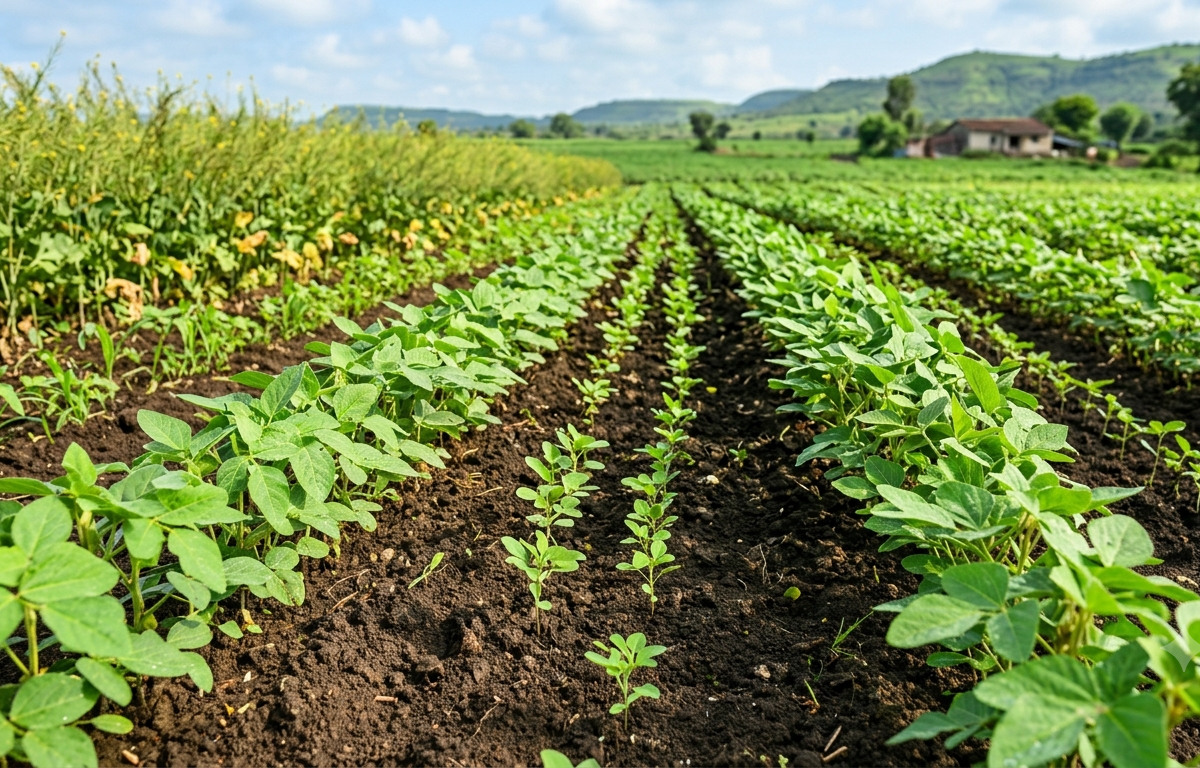
Sowing period: September to November
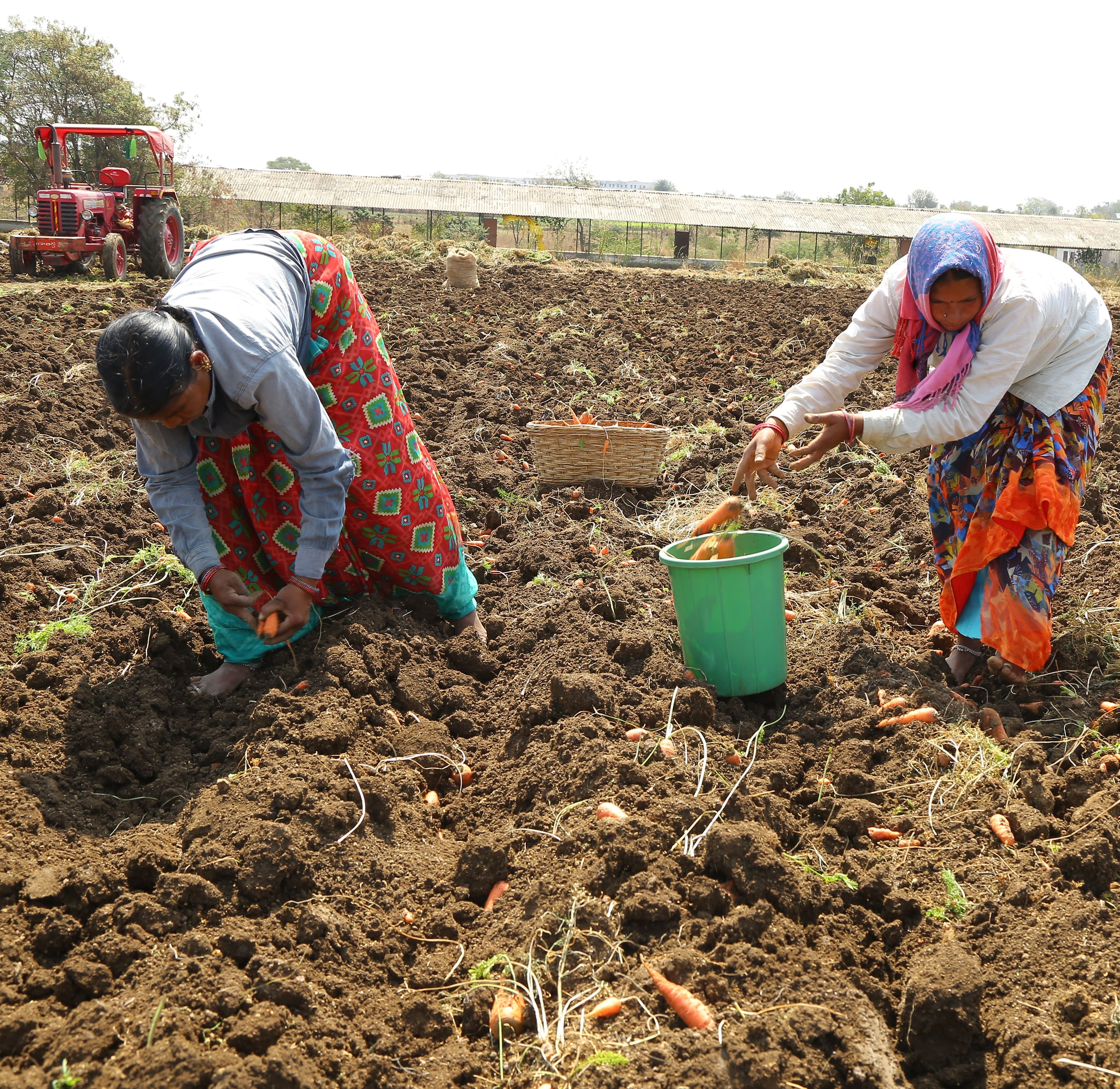
Harvesting period: March to April
Crop season: Rabi
Key growing regions:
- Madhya Pradesh – Dewas, Khargone, Sehore, Ujjain, Vidisha
- Maharashtra – Amarawati, Akola, Vashim, Wardha, Latur
- Gujarat – Surat, Dahod, Rajkot, Amreli, Junagarh
- Uttar Pradesh – Kanpur, Lucknow, Varanasi, Ghaziabad, Lalitpur
- Karnataka – Gadag, Raichur, Gulbarga, Bidar, Dharwad
- Rajasthan – Tonk, Kota, Baran, Jhalawar, Ajmer
- Telangana – Adilabad, Warangal
Production trend and Stock position:
- Directorate General of Foreign Trade (DGFT) had removed the condition of advance authorization letter for Pulses import, which means now importers need not have an advance authorization letter from DGFT for Pulses import.
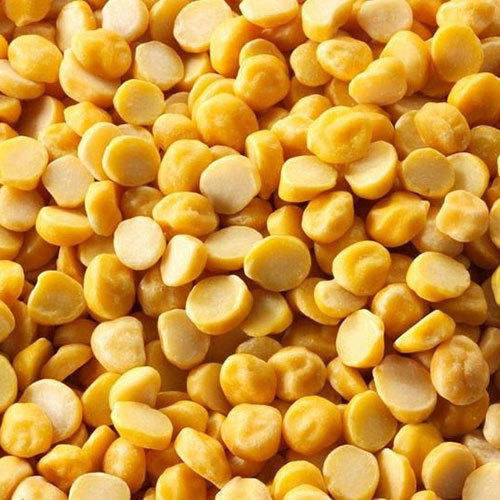
- According to Agriwatch website, Bengal Gram production is likely to decline from 98.75 lakh tonne (lt) to 87.78 lt for MY 2019-20 and may improve further if light showers of rains continue in late planting areas.
- Stock positions of Bengal Gram were up by 0.44 per cent held at National Commodity Clearing Limited (NCCL) approved warehouses at Bikaner, Indore and Jaipur locations. The stocks held as on July 01, 2019 was 1,01,168 MT compared to 1,00,728 MT as on July 08, 2019.
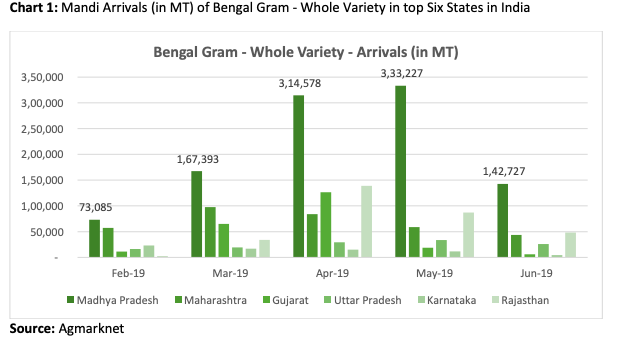
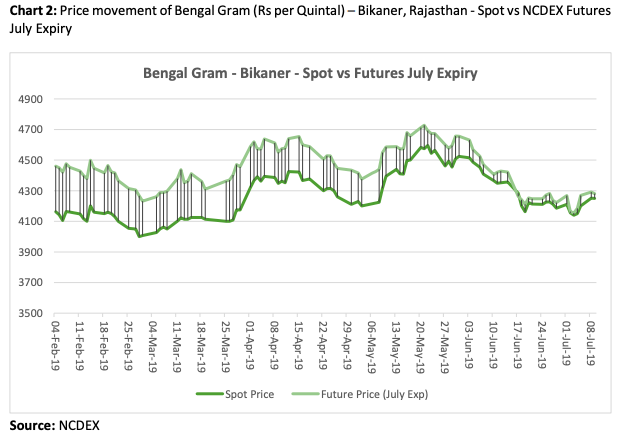
Contango: Markets currently are in convergence with each other where the Futures prices and the Physical Spot market prices are in sync
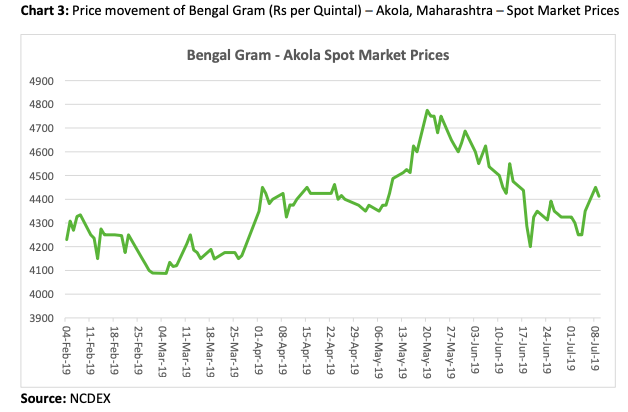
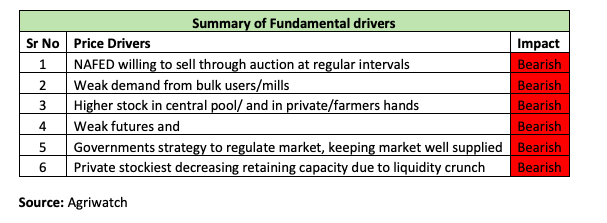
Market commentary: Price outlook
Overall Bengal Gram prices are likely to trade steady to slightly weak in the immediate/short term.