 Jyoti Sharma
September 24, 2026
Jyoti Sharma
September 24, 2026
For generations, farming has depended on observation.
Look at the crop. Feel the soil. Watch the sky. Check the market. Talk to other farmers.
Those instincts still matter. But now, farmers can add another layer to that knowledge: technology & data. And that is where smart farming comes in.
From satellite imagery and AI-powered crop monitoring to digital advisories and real-time market information, technology is changing how agricultural decisions are made. And in India, this transition is moving beyond experiments.
is changing how agricultural decisions are made. And in India, this transition is moving beyond experiments.
As of February 2026, more than 8.48 crore Farmer IDs had been generated under AgriStack, while the Digital Crop Survey during Kharif 2025 covered more than 28.5 crore plots across 604 districts.
So, what does this mean for the future of agriculture?
What is smart farming?
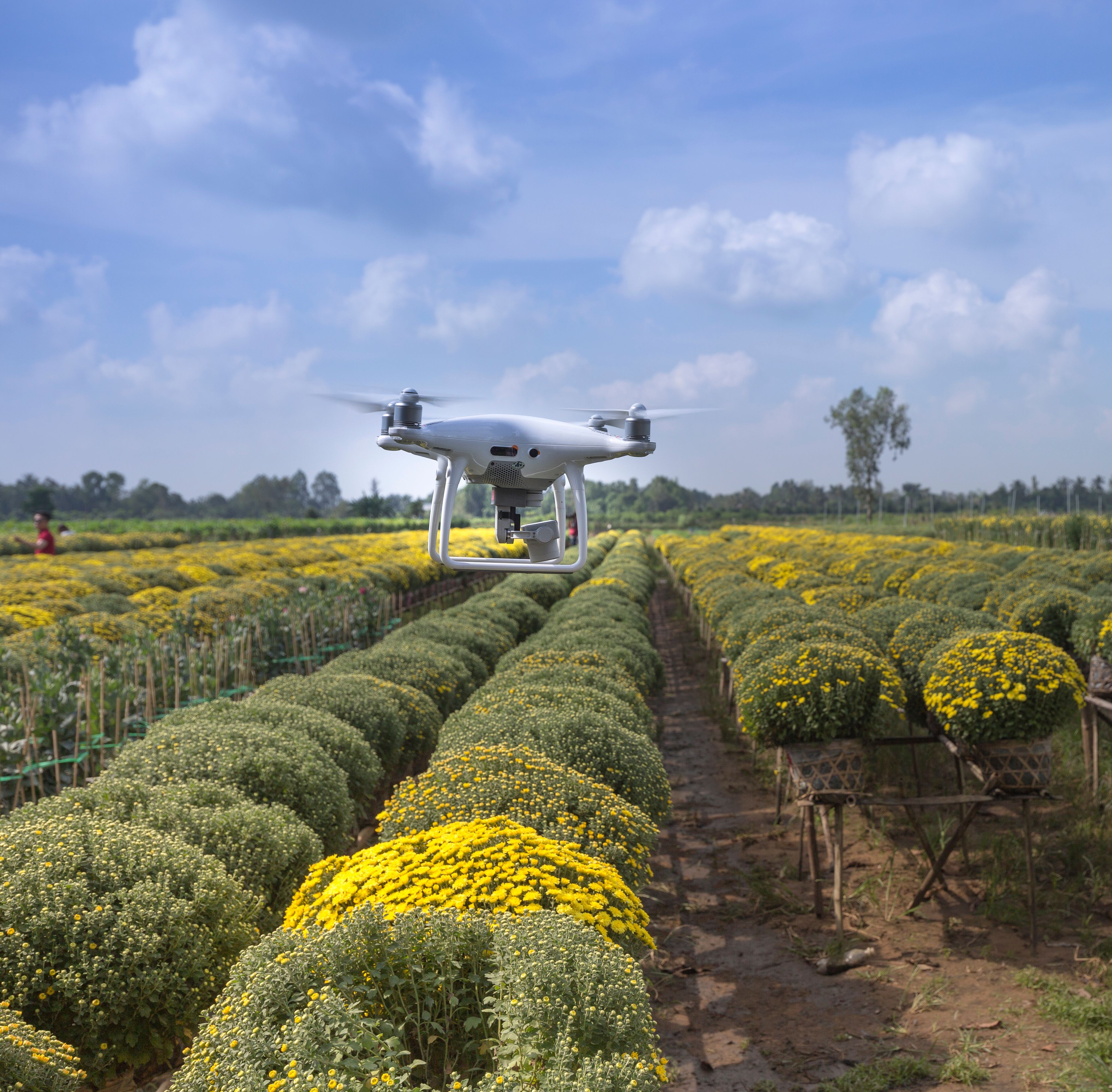
Smart farming is essentially agriculture supported by connected data and technology.
It can involve AI, machine learning, satellite imagery, remote sensing, GIS, IoT devices, weather intelligence and digital platforms.
But the technology itself isn’t the end goal. The real objective is to answer practical questions:
Is the crop healthy? Where is stress developing? Should irrigation be changed? Is a pest problem emerging? When should the farmer intervene? What is happening in the market?
Better answers can lead to better decisions.
- From walking the field to monitoring it digitally
A farmer can physically inspect a field, but what if there are dozens or hundreds of fields to monitor? Satellite imagery and remote sensing can help identify changes across large areas.
agribazaar’s AgriBhumi uses satellite imagery and machine learning for applications such as crop identification, acreage estimation, crop rotation analysis, and yield forecasting. Its platform also supports remote field monitoring and change detection. This is one of the biggest shifts in smart farming: moving from occasional observation to continuous, data-supported monitoring.
- AI is becoming a farming assistant
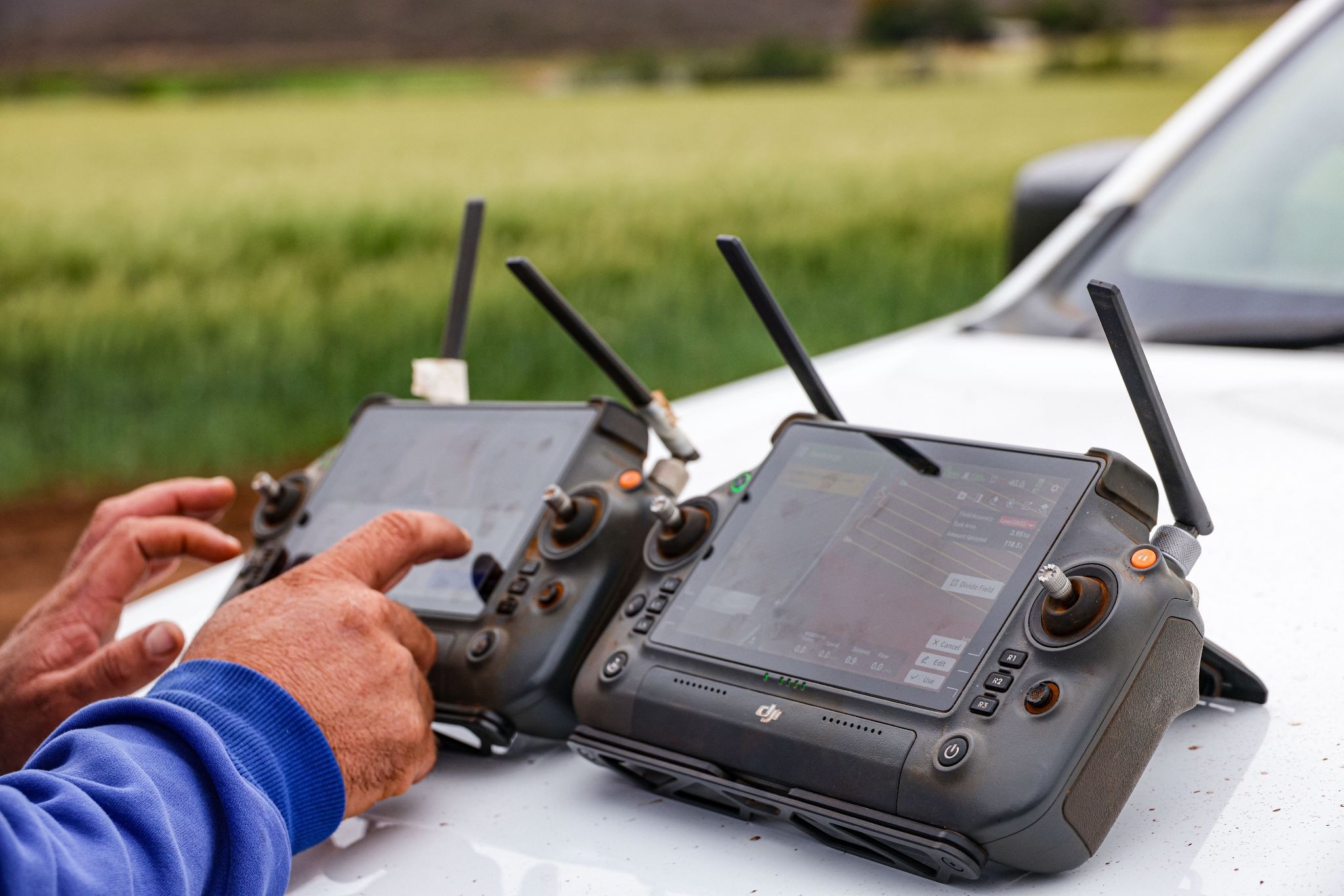
AI in agriculture isn’t only futuristic robots. It can be as practical as helping identify a pest, interpreting crop-health information or providing a weather-based recommendation.
India’s National Pest Surveillance System supported more than 10,000 extension workers and covered 73 crops and 436 pests by July 2026. The government’s AI-based weather advisory initiative had also reached approximately 5.28 crore farmers.
Meanwhile, Bharat-VISTAAR, launched in 2026, is designed as a multilingual, voice-first AI platform providing location-specific information on crops, weather, markets, pest and disease alerts and soil health.
- Crop problems can be identified earlier
One of the biggest advantages of technology is timing.
By the time a disease or pest problem becomes obvious across an entire field, the opportunity for early intervention may already have narrowed. AI-based image analysis, satellite monitoring and field intelligence can help identify potential problem areas earlier.
agribazaar’s technology ecosystem includes Crop Doctor for crop problem identification and AgriKnow for crop health monitoring and advisory, helping translate agricultural data into actionable information.
- Weather data can influence farm decisions
Weather forecasts are useful. But a generic forecast isn’t always enough for agriculture. Farmers need to know what rainfall, temperature or weather changes mean for sowing, irrigation, spraying or harvesting. That’s why location-specific weather intelligence is becoming increasingly important.
The 2026 government AI-based monsoon forecasting pilot reached 3.88 crore farmers across 13 states, with 31–52% of surveyed farmers reporting changes to sowing or land-preparation decisions based on the forecasts.
- Smart farming doesn’t stop at the farm gate
Producing more efficiently is useful only if farmers can also access markets effectively. Digital agricultural marketplaces can provide price information, connect buyers and sellers and simplify transactions. agribazaar combines its pre-harvest intelligence capabilities with digital commodity trading, market insights, quality assessment and AgriPay, creating a connection between crop intelligence and post-harvest market access.
What does the future of agriculture look like?
The future probably won’t be defined by one piece of technology. It will be defined by connected technologies. Satellite imagery can tell us what is happening in a field. AI can help interpret it. Weather data can add context. Market information can help with selling decisions. Digital payments can simplify settlement. All completing the concept of smart farming.
Not replacing agricultural knowledge, but making that knowledge more timely, measurable and actionable. And with India’s digital agriculture infrastructure expanding rapidly, the future of agriculture is already being built at a fast pace.
FAQs
- What is smart farming?
Smart farming uses technologies such as AI, satellite imagery, GIS, IoT, remote sensing and data analytics to support better agricultural decisions. - How does smart farming help farmers?
It can help farmers monitor crop health, identify potential problems, understand weather conditions, optimise inputs and make more informed farm-management decisions. - What role does AI play in smart farming?
AI can analyse crop, weather, satellite and field data to support pest detection, crop monitoring, forecasting, advisory and other agricultural applications. - What is AgriBhumi?
AgriBhumi is agribazaar’s land intelligence platform that uses satellite imagery and machine learning for applications including acreage estimation, crop identification, yield forecasting and remote farm monitoring. - How does agribazaar support smart farming?
agribazaar combines crop intelligence, advisory, satellite and GIS monitoring, Crop Doctor, AgriBhumi, digital marketplace services, market insights, quality assessment and AgriPay.
Disclaimer
The content published on this blog is provided solely for informational and educational purposes and is not intended as professional or legal advice. While we strive to ensure the accuracy and reliability of the information presented, agribazaar make no representations or warranties of any kind, express or implied, about the completeness, accuracy, suitability, or availability with respect to the blog content or the information, products, services, or related graphics contained in the blog for any purpose. Any reliance you place on such information is therefore strictly at your own risk. Readers are encouraged to consult qualified agricultural experts, agronomists, or relevant professionals before making any decisions based on the information provided herein. agribazaar, its authors, contributors, and affiliates shall not be held liable for any loss or damage, including without limitation, indirect or consequential loss or damage, or any loss or damage whatsoever arising from reliance on information contained in this blog. Through this blog, you may be able to link to other websites that are not under the control of agribazaar. We have no control over the nature, content, and availability of those sites and inclusion of any links does not necessarily imply a recommendation or endorsement of the views expressed within them. We reserve the right to modify, update, or remove blog content at any time without prior notice.