 Jyoti Sharma
September 3, 2026
Jyoti Sharma
September 3, 2026
Farming has always been about making decisions: What should be planted? When should irrigation begin? Is the crop healthy? When is the right time to harvest? And once the produce is ready, where should it be sold?
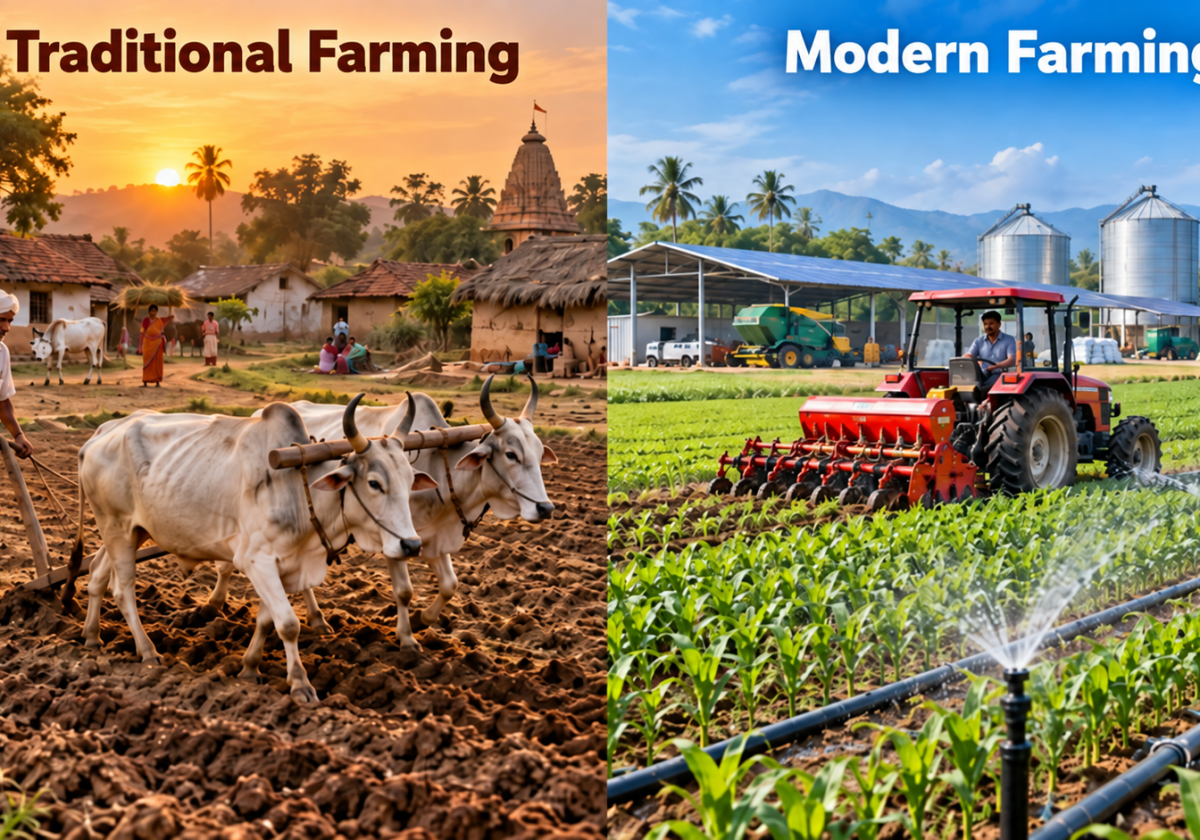
For generations, these decisions depended largely on experience, observation and local knowledge. Those remain invaluable, but farmers today have something more at their disposal: data and technology.
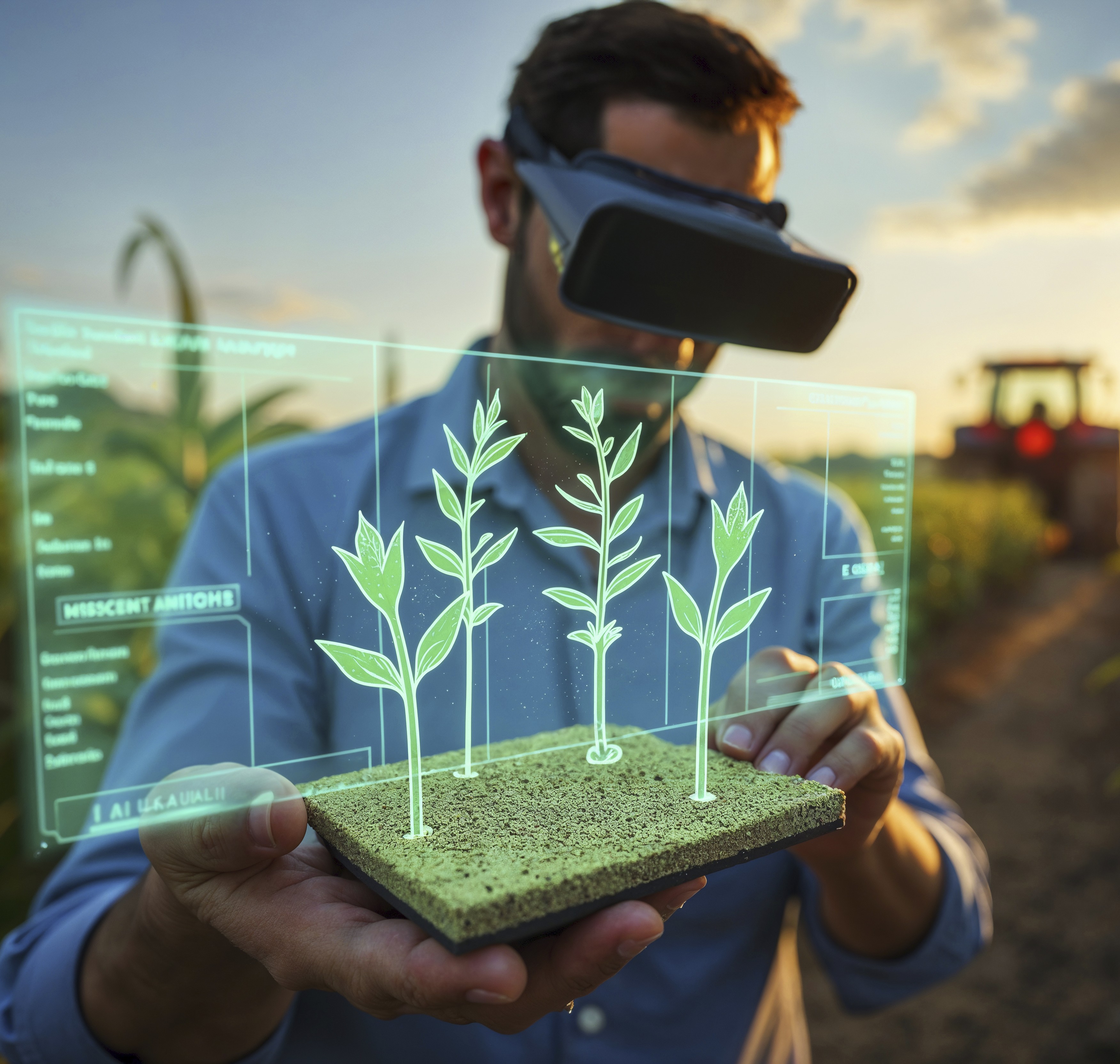
India’s agricultural ecosystem is rapidly becoming digital. Under the Digital Agriculture Mission, technologies such as AI, satellite imagery, digital farmer identities and crop surveys are being integrated into agriculture. By March 2026, more than 9.20 crore Farmer IDs had already been generated under AgriStack.
So, how does technology improve farming? Here are five important ways technology is transforming agriculture.
1. Satellite technology makes farms more visible
A farmer can inspect a field physically, but what happens when an agribusiness needs to monitor thousands of farms across multiple districts? Satellite imagery makes this possible.
Combined with Geographic Information Systems (GIS) and Artificial Intelligence, satellite data can help identify farm boundaries, monitor vegetation, analyse crop development and detect changes across agricultural land.
This allows farmers, agribusinesses, financial institutions and policymakers to move from periodic physical observations towards continuous, data-backed monitoring. The scale is already significant. agribazaar’s AgriBhumi combines satellite imagery, AI, GIS and geo-tagged farm data and has mapped more than 3 crore hectares of farmland across 18 Indian states.
2. AI helps farmers act earlier
One of technology’s biggest advantages is not just identifying problems but detecting them before they become bigger problems!
Artificial Intelligence can analyse images, weather patterns and agricultural datasets to identify crop stress, pests and other risks. India’s National Pest Surveillance System now supports 66 crops and over 432 pest types. Meanwhile, an AI-based monsoon forecasting pilot for Kharif 2025 reached 3.88 crore farmers across 13 states. Among surveyed farmers, 31–52% changed sowing or land-preparation decisions based on the forecasts. That demonstrates how digital information can translate into real farm-level decisions.
3. Precision farming can improve resource use
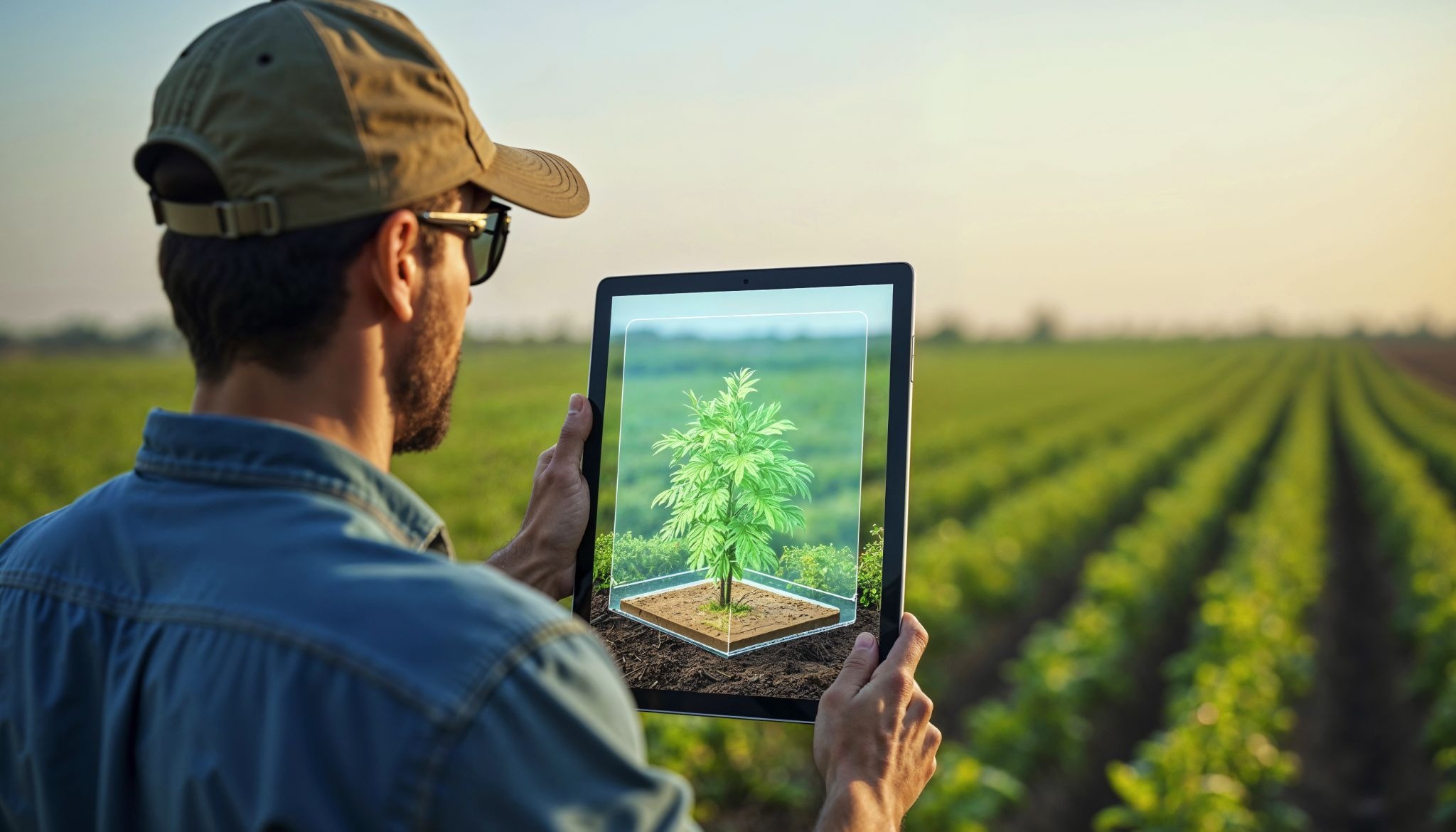
More input does not necessarily mean more output. Applying too much water, fertiliser or pesticide can increase costs and potentially affect soil and crop health. Precision agriculture aims to solve this by helping farmers understand where, when and how much input may be required.
Sensors, drones, satellite data, GPS-based equipment and farm analytics can support more targeted irrigation, nutrient application and crop protection. For farmers, that can mean better resource utilisation. For agriculture as a whole, it means moving away from uniform decisions towards field-specific farming.
4. Digital platforms improve market access
Technology is transforming agriculture even after the crop leaves the field.
Traditionally, farmers may have had limited visibility into prices outside nearby markets. Digital agricultural marketplaces can connect farmers, traders, processors and institutional buyers across geographies while providing better access to price information.
agribazaar illustrates how quickly this ecosystem is scaling. Its digital marketplace connects 4 lakh+ farmers, traders, processors and institutional buyers and, as of 2026, has facilitated more than 600,000 trades involving over 15 MMT of agricultural commodities. Technology therefore not only improves how crops are grown; it can also improve how agricultural produce is discovered, traded and paid for.
5. Data is making agricultural decisions smarter
Perhaps the biggest transformation in agriculture is that it’s becoming increasingly data-driven.
Weather information, historical crop patterns, soil information, satellite observations and market prices can increasingly be brought together to support decisions throughout the agricultural cycle.
The government’s Digital Agriculture Mission itself has an outlay of ₹2,817 crore, reflecting the growing importance of digital infrastructure to Indian agriculture.
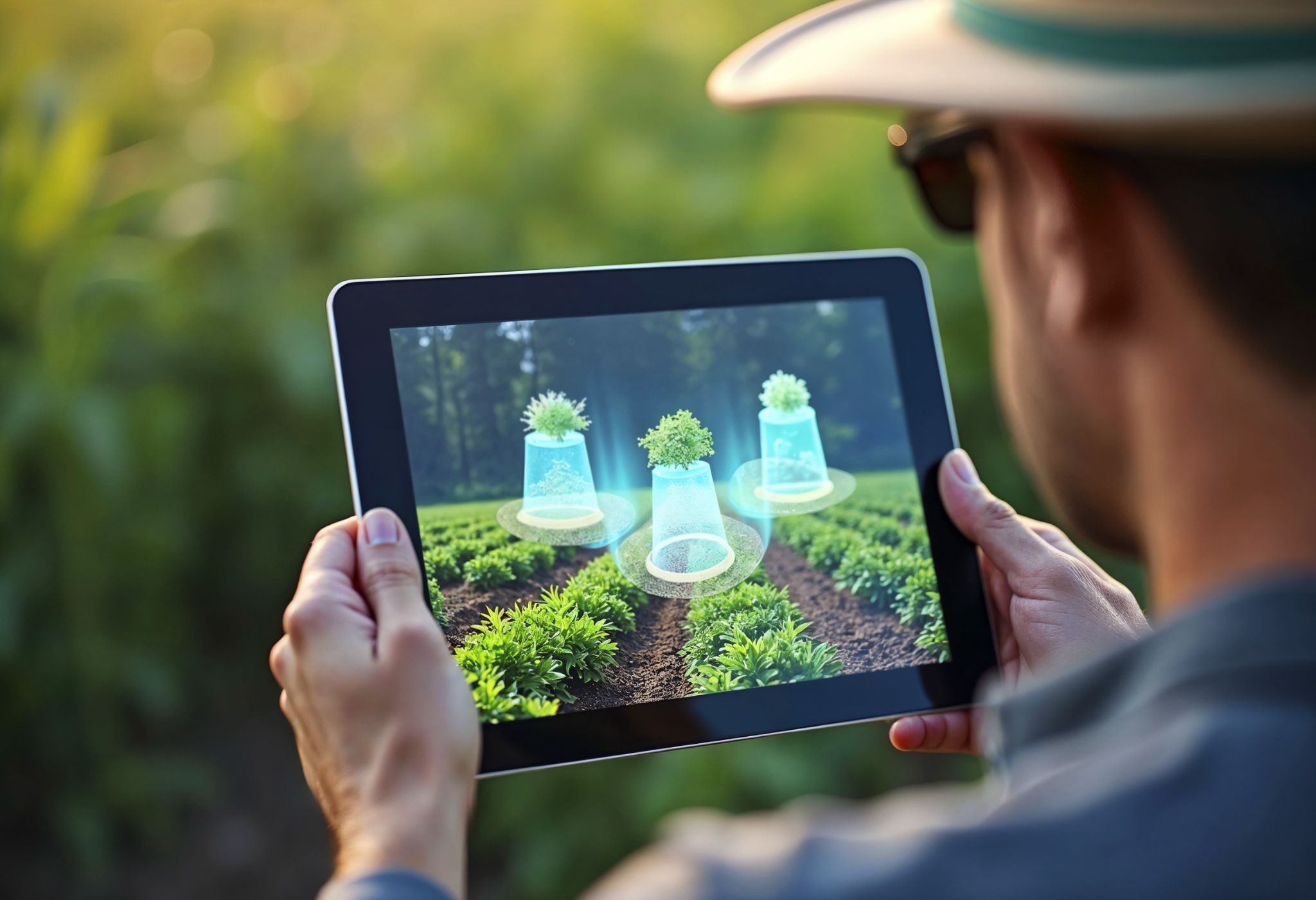
How agribazaar is transforming agriculture through technology
For agribazaar, technology connects both sides of agriculture: production intelligence and market access.
Through AgriBhumi, farmers and stakeholders can access satellite-powered agricultural intelligence, while agribazaar’s digital marketplace enables transparent price discovery and digital trading. Other digital solutions, including Crop Doctor, Farm Scorecard and AgriPay, further connect crop intelligence, decision-making and transactions.
That is ultimately the answer to “How does technology improve farming?” It gives farmers and agricultural businesses better visibility, better information and more opportunities to make informed decisions. Technology will not replace the farmer’s experience. It can make that experience considerably more powerful.
FAQs
- How does technology improve farming?
Technology supports better crop monitoring, resource utilisation, weather planning, pest detection and market access. - What technologies are transforming agriculture today?
AI, satellite imagery, drones, IoT sensors, GIS, digital marketplaces and data analytics are among the major technologies. - How can AI help Indian farmers?
AI can analyse agricultural data to support pest identification, crop monitoring, weather forecasting and farm advisories. - What is precision agriculture?
Precision agriculture uses farm-level data and technology to apply inputs and manage crops more accurately. - How does agribazaar use agricultural technology?
agribazaar combines digital agricultural trading with solutions such as AgriBhumi, Crop Doctor, Farmer Scorecard and AgriPay.
Disclaimer
The content published on this blog is provided solely for informational and educational purposes and is not intended as professional or legal advice. While we strive to ensure the accuracy and reliability of the information presented, agribazaar make no representations or warranties of any kind, express or implied, about the completeness, accuracy, suitability, or availability with respect to the blog content or the information, products, services, or related graphics contained in the blog for any purpose. Any reliance you place on such information is therefore strictly at your own risk. Readers are encouraged to consult qualified agricultural experts, agronomists, or relevant professionals before making any decisions based on the information provided herein. agribazaar, its authors, contributors, and affiliates shall not be held liable for any loss or damage, including without limitation, indirect or consequential loss or damage, or any loss or damage whatsoever arising from reliance on information contained in this blog. Through this blog, you may be able to link to other websites that are not under the control of agribazaar. We have no control over the nature, content, and availability of those sites and inclusion of any links does not necessarily imply a recommendation or endorsement of the views expressed within them. We reserve the right to modify, update, or remove blog content at any time without prior notice.